


Speaking Personally
I think it’s important to share a little about myself, because when you’re choosing someone to work with, you need to know whether they feel like the right fit for you. With that in mind, I want to be open about some of my past experiences and what led me toward counselling as a career choice.
It's not customary for counsellors to offer much personal information, and I’m mindful of that. However, I’ve received thoughtful feedback from readers who’ve said that a small amount of personal context helps them decide whether they can connect with a counsellor. So I’ve chosen to share a little more than usual.
I’ve told my story in a narrative way, and in places where the material is heavier, I’ve used a light‑hearted tone. This isn’t to minimise anyone’s experiences — including my own — but to reflect the perspective I’ve gained over time. Having worked through much of what I describe, I’m able to look back with a different kind of softness, and sometimes even humour.
Image Align
Lets Start Here...
A counsellor’s life isn’t any easier than anyone else’s. In fact, counsellors who’ve faced their own challenges and done the work to understand them often bring a deeper level of insight and empathy to the people they support. It’s not about having everything “sorted”; it’s about being real. In my experience, that’s where genuine growth begins.
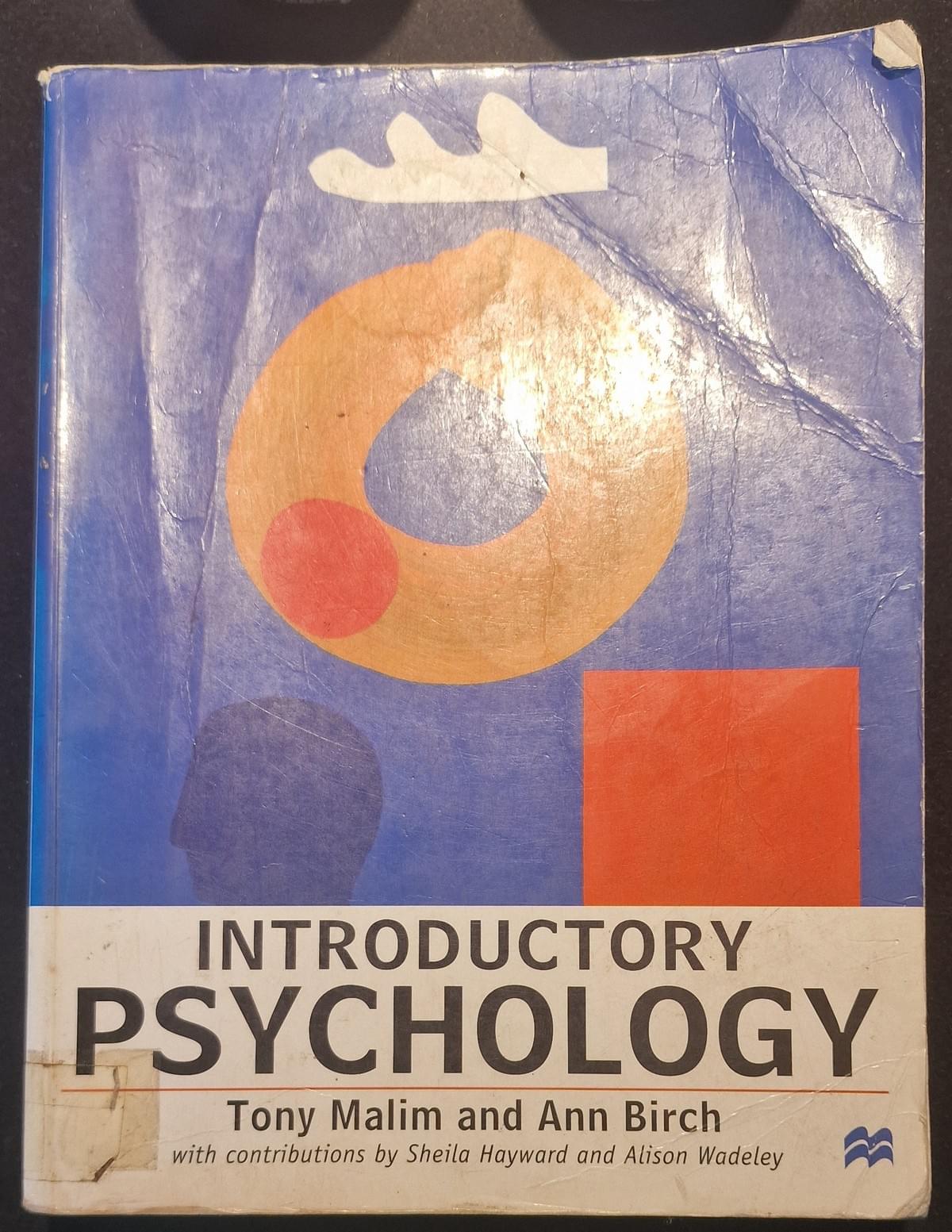
I was 14 when I first became interested in counselling. I remember walking through the school library and being drawn to a book called Introduction to Psychology. Below is an image of that exact book. Something shifted in me the moment I picked it up. I was navigating a dark period at the time, and discovering that book felt like someone had quietly turned on a light. I’ll admit — I “forgot” to return it.
It was an unusual age to be thinking about counselling, but when the spark appeared, I followed it. Even as a child, I spent a lot of time thinking, observing, and drifting into my own world. It brought a sense of calm, especially at school. School was somewhere I had to be, not somewhere I wanted to be, and disappearing into my thoughts became a kind of escape.
Nothing about school felt easy. It didn’t prepare me for much, and I was often misunderstood. Teachers labelled me “the naughty child” for staring into space, “stupid” for still writing in pencil when everyone else had moved on to pens, and on top of that, being beaten by other students became a daily occurrence.
#Button Align

It Was Right Infront Of Them
The professionals didn’t recognise that I had ADHD. I wasn’t “stupid” — I simply needed the right kind of learning support. Looking back, I still struggle to understand how it was missed, because the signs were there. Perhaps they were overshadowed by assumptions and pre‑judgements.
Button Align
Being a Counsellor: The Main Influence
I’ve thought about removing this next section more times than I can count. Maybe because part of me worries it’s “too much” or that it edges into over‑disclosure. But every time I’ve shared earlier drafts, people have told me it helped them understand who I am and why I do this work. So instead of deleting it, I’ve chosen to revise it — and expand it — with intention.
I think it matters that anyone reaching out to a counsellor has some sense of why that counsellor started practising in the first place. Not every detail, obviously, but enough to understand what drives them, what shaped them, and what they bring into the room. Trust grows when both people are willing to be real. So… here I go.
Discovering that psychology book was the moment everything clicked into place. But something happened before that — something that set the stage.
When I was 13, in Year 9, I became attached to someone. The feelings weren’t reciprocated, and when they found out, The person cut off the friendship completely. For reasons I didn’t understand at the time, the loss hit me like a freight train. Emotionally, physically — the whole lot. The persons absence felt like someone had pulled the plug on my entire system.
Weeks passed, and things got worse. Back then, the mantra everywhere was, “If you’re struggling, talk to someone.” So I did. I told a teacher — who informed me it was “just a crush.” I told the school nurse — who promptly told the girl involved. I wasn’t impressed. Clown on the left invalidating a child’s feelings, joker on the right breaching confidentiality. Stuck in the middle with… absolutely no one.
After that, I shut down. Hard. My symptoms intensified. I now understand that sudden detachment can trigger a shock response, but at the time all I knew was that I couldn’t eat, couldn’t sleep, and was harming myself just to cope. Not exactly the “just a crush” vibe.
I was reported to social services twice — once by a doctor and once by the teacher. I didn’t mind that they reported it; they were seeing the situation for the first time, whereas I’d been living it for months. What I did mind was how it was handled. I didn’t feel like a person. The doctor sprinted off with his assumptions about suicide like a kid on sugar at a Taylor Swift concert. The teacher reported it to cover himself, not out of care. No communication. No compassion. No empathy. I felt like a problem to be managed, not a child who was hurting.
The first I heard about any of it was when a social worker turned up at my house after school. Her name was Karen. Of course it was.
Two weeks later, my mum and I were sent to a psychiatric hospital for counselling sessions we were “encouraged” to attend. It was either that or social services playing spy kids outside the house for months. Neither of us wanted to talk. My mum felt guilty; I felt betrayed. So we did what we thought we had to do: we acted fine. An hour later, we were discharged.
The session itself was awful — two strangers, one counsellor and one observer, leaning in, asking what I’d used to harm myself and why, implying irrationality rather than trying to understand. It wasn’t therapy; it was an interrogation. I’m very glad I don’t practise like that.
There was no human element in any of it. The whole system felt mechanical, impersonal, and disconnected — like a machine with lots of moving parts but no actual function. I left more traumatised than when I went in. And it changed the way I saw people in positions of power. It also planted the earliest seeds of why I eventually became a counsellor: because no one should be treated like that when they’re already struggling.
#Button Align

